Wednesday, September 5, 2012

Beeswax Lip Balm

I'm going to hang out with my sisters-in-law tomorrow so I wanted to get some supplies to make facials and lip balm. I tried out the lip balm today to see how easy it was to make. I can't believe I've been buying lip balm for all these years, it was so incredibly easy to make! It took me maybe 5 minutes total and I only needed to buy a couple things that I didn't already have.

Homemade lip balm ingredients
The ingredients are pretty simple: beeswax, almond oil and honey are the base. Then I added vitamin E, tea tree oil and lavender oil to make it a soothing lip balm (my whole family gets chapped lips in the winter), but you can add whatever essential oils you want to give it different properties (peppermint is a good one for a cooling, refreshing lip balm). Here is the ingredient list:

1 tablespoon grated beeswax (that suspicious looking white powder is pre-powdered beeswax)
4 tablespoons almond oil
1 teaspoon honey
10 drops tea tree oil
5 drops lavender oil
400 IU (1 softgel) vitamin E

You mix the beeswax and the almond oil in a small saucepan and heat it over the lowest heat setting you have until it melts (it will be clear). Then remove the pan from the heat and add the honey plus the essential oils and vitamin E if you're using them. Pour the liquid into your containers before it starts to harden and let it cool before using. I only filled a couple of those little metal containers, but I had enough lip balm to fill at least 5 or 6 of them if not more. The mixture gives your lips a nice, creamy feel without the stickiness of the waxes in some lip balms. It's good stuff!

Sunday, July 22, 2012

Our big news.

We found out at the beginning of the month we'll be expecting a third child, which we're very excited about. You can tell you're an avid gardener when you find out your due date is March and you go, "Phew, too early for planting season to have started yet!" I was not looking forward to being uber pregnant and trying to plant seeds. Having a baby is much easier to work around, I just throw them in the Moby and off I go!

In any event, that's my news. I have some more stuff to post but it will have to wait until later!

Tuesday, June 5, 2012

DIY sugar scrub plus dove

So if you're anything like me, you love sugar scrubs, like those made by Bath and Body Works, but you hate the huge list of petrochemicals that they use to make said sugar scrub. Well, worry no longer! While I continue my search for the perfect sugar scrub recipe, here is one that I use to make a single dose, make-and-use batch of sugar scrub for when I'm showering.

Your base ingredients
The basic ingredients are demerara/turbinado sugar, almond/apricot oil and an essential oil of your choice (I went with lavender, this is totally optional, only if you want a scent). I use a half pint jar (of which I have many) for mixing my ingredients. I put in about half a jar's worth of sugar, then I pour in oil until all the sugar is coated (when I mix mine, there is no oil floating over the sugar, but you can add more if you like it with more oil). Then I add 10-15 drops of essential oil and mix it all with my hand until it's all combined. The oil will naturally settle at the bottom and that's fine, you'll mix it up again in the shower when you scoop up a handful.

To use, just scoop up a bit in your hand and scrub it on your skin while you're in the shower. It will leave an oily residue on your skin, which is fine. Rinse off as much as you can and the rest will absorb very quickly and your skin will feel soft, not oily.

One big advantage I've noticed is that I don't feel cold when I get out of the shower. I'm not a scientist, but I credit this to the oil preventing evaporation and thus cooling. This is great because I know that it's keeping in the moisture and keeping my skin from drying out. I really like using the scrub in the winter when my skin vaguely resembles papyrus and itches like crazy from the drying effects of New England air and my wood stove.

In other news, we have an unexpected visitor, a white domesticated dove, who absolutely refuses to leave. Probably because we feed it, but I'm too much of a softy to stop so it will probably be around until it gets eaten by something/flies away/lives to a ripe old dove age and dies.

The gender-unknown dove
My children insist it's a she. I insist it's an it. My husband insists it needs to find its home before he finds out whether dove is tasty or not. We originally took it in because it couldn't fly, but after a few days in a makeshift bird cage consisting of a food dish, a waterer and wood shavings in a big storage bin with an old screen on top, it was able to fly. I thought that was the end of it as it flew off into the sky.

Well, boy was I wrong! Not only has it not left, but it expects me to feed it every day. It's like a chicken, except without the whole egg-producing-not-pooping-on-my-steps...thing. The kids like looking for it and for the most part it keeps up and on the roof. It's fairly low maintenance, no more inconvenient than feeding the regular population of songbirds that live in my front yard. It's just...weird. It has a band and everything but it won't go home!

Wednesday, May 23, 2012

Chickens galore

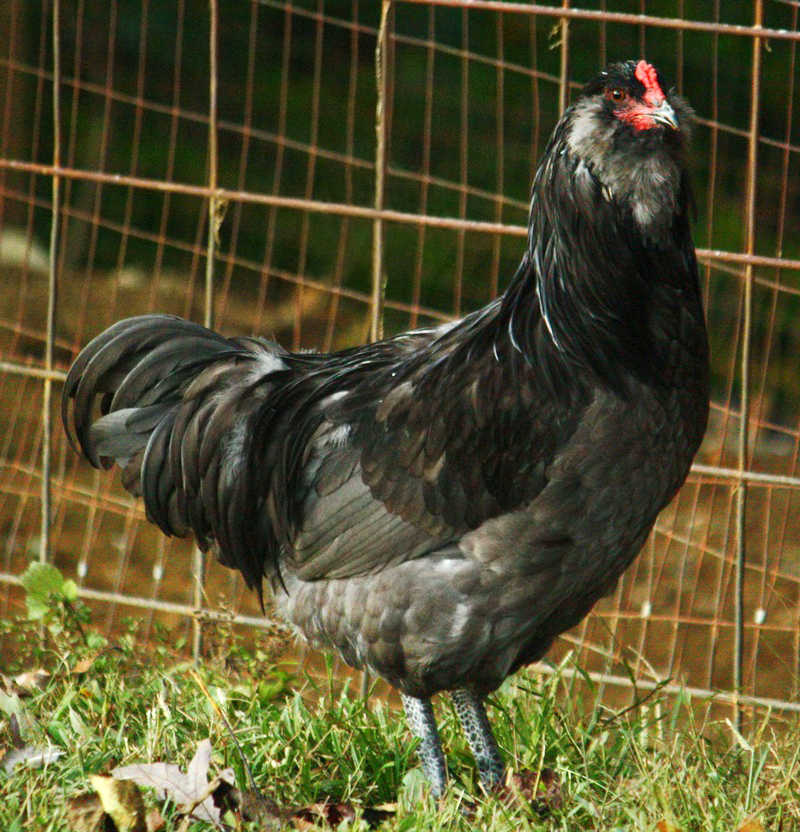
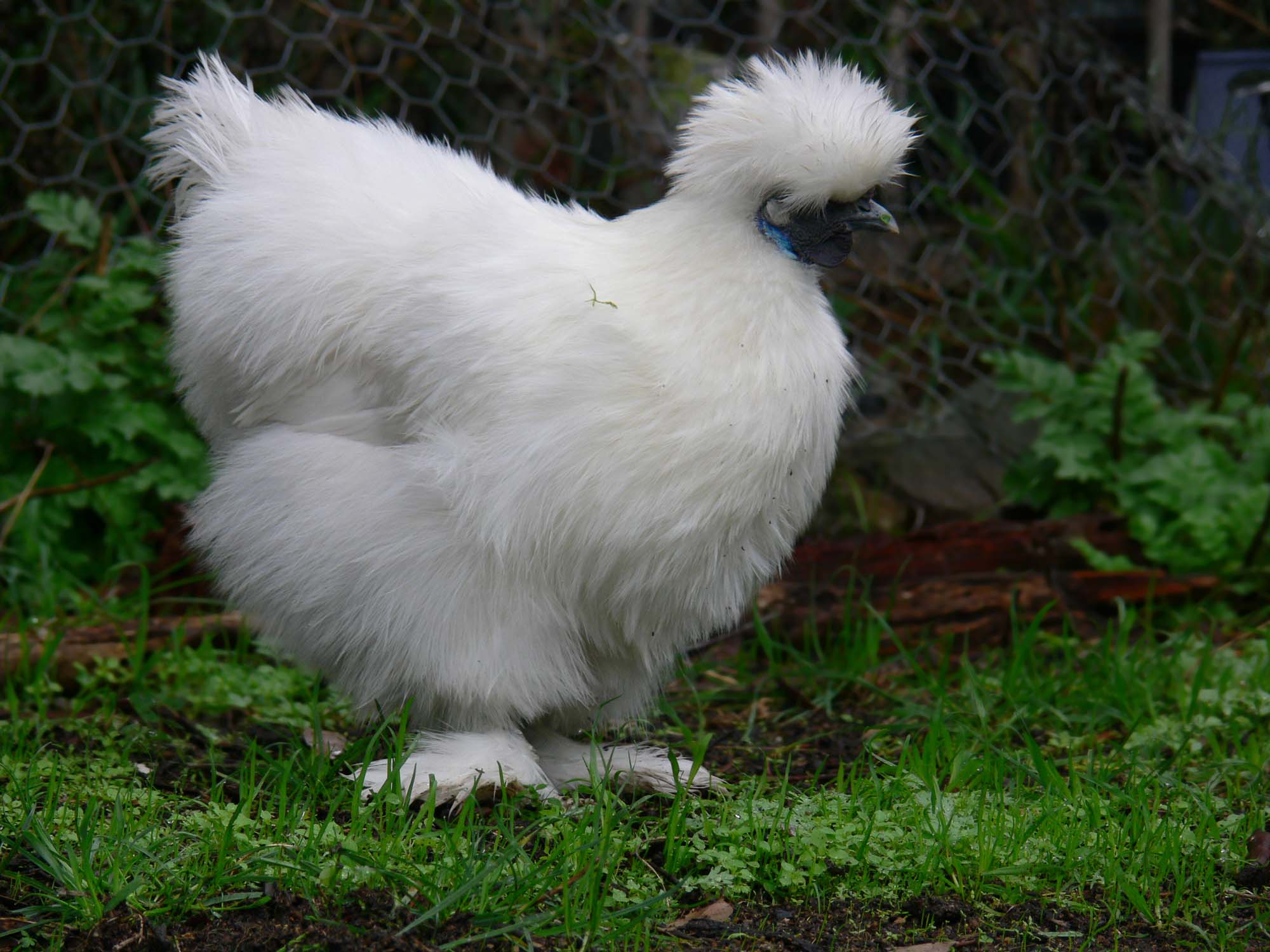
We currently have...lessee...sixteen chickens right now. At least one of those is a rooster. Another four could potentially be roosters or hens. The other eleven are all hens. Six hens and the rooster are about three years old now, our original egg laying group. They're a Speckled Sussex/Ameraucana mix. We have four baby Brahma hens that are now about...a month or so old? They're already getting big, but they'll also be larger than your average bird when they're full grown. We have four Silkies, about three weeks old, that are of an unknown gender for the moment, they could be hens, roosters, or a mix. You can't sex Silkies until they get older because they're really difficult to tell apart. Then we have one little Araucana, Owen's hen Owen, who is only two weeks old, hatched on May 9th. All in all they make a good little group in our chicken coop. I'm very glad now that we separated the two sides of the coop because it allows for us to isolate the chicks on one side without access to the run while not changing to set up for the grown hens. I try to let the chicks out every day to peck in the grass and get some sunshine. Today I fed them a big fat army worm that I found while weeding my berry patch, and the Brahmas proceeded to fight over it and run around the gated area I let them outside in trying to play keep away. It was hilarious.

Grass, it appears, is the bane of my existence. I agree with my mother's sentiment, which is that a weed is something which is neither pretty nor edible. I would also add medicinal to that list, as I use many supposed "weeds" as herbal teas for various ailments. Just the other day I discovered the weird leaves I used to pull up as a child are in reality broadleaf plantain, which is edible.

Yummmm...
I don't care for it, it's very bitter (anyone who has grown their own lettuce knows that homegrown lettuce can also be bitter due to its high tannin content). I don't like bitter, hence me not ever being attracted to coffee or alcohol, but the kids had no problem with it. They happily ate all the plantain leaves I picked with their lunch! I never would have thought that plantain could be edible. I'm debating going on a search for lamb's quarter to use in a salad because I know I like lamb's quarter and it's easy to find. I have a book on foraging that I hope to make use of this summer. I mostly need a good spot to go in the woods where I can find all this without trespassing or illegally harvest on government property. Hrm...

Monday, May 21, 2012

Adventures in foodstuffs

I've been adventuring with making a greater variety of cheap, good for you foods. Lately it's been beans, rice and lentils. I made a lentil and veggie tostada recipe that was well received by the adults in this family but the kids turned up their noses. Then I made a veggie stir fry with brown rice that was at least eaten by the children with minimal prodding. Then, I made a black bean burger that everyone loved (well, Jon only got to eat one reheated patty because he was gone the two nights I made it and no other burgers lasted). It was a great improvement over the chickpea burger that was all right in taste but kind of dry in consistency. This burger was just perfect. Nice and moist inside with a crispy cornmeal coating (say that ten times fast). Add tomato, lettuce and onion and a whole wheat organic bun and voila! Dinner perfection!
My burger with homegrown snap peas on the left (cooked from peas I picked and froze last year, Maine hasn't been that good to me yet)
So tonight was my second ever try at making homemade hummus. I tried years ago using canned chickpeas and a recipe that for some strange reason did not include tahini/seasame seeds. The result was a lemony chickpea nastiness that no one in the house liked and it scared me off of making hummus again for quite some time. But since we eat hummus like it's going out of style, I figured the time was ripe for me to give it another shot with my super awesome blend-anything machine and with a new recipe. The result was an excellent hummus recipe that only lacks a bit of seasoning, probably because I used garlic powder and not actual garlic.

Here is my recipe:

- 2 15oz cans of chickpeas, one drained, one undrained (I used fresh cooked chickpeas, so 3 cups of cooked plus 1/2 cup or more of water for consistency)
- 1/4 cup raw sesame seeds (I used toasted and it was fine)
- 1 tbsp olive oil
- 1/4 cup lemon juice
- 1 garlic clove, peeled (here I used garlic powder and it was quite garlicky enough)
- 1 tsp cumin
- salt

You puree everything but the salt until it reaches the consistency you want (add water gradually to make it thinner). Then you add salt to taste. You can easily make this into different flavors by adding things such as pureed roasted red pepper, pureed spinach and artichoke, extra garlic or hot pepper powder to the base hummus. I highly recommend using fresh cooked chickpeas. A 1lb bag of dry chickpeas yields about 6-6 1/2 cups of cooked chickepeas, which is enough for two batches of hummus. This recipe makes about 3-4 cups of hummus depending on what else you add to it, how much you can get out of your food processor/blender, and whether your husband and/or children eat some of it when you're not looking. Cost wise, this recipe is excellent. On a good day, when the big tubs of hummus are going on sale, I can nab two for $5 or $2.50 apiece. On a bad day they cost me $3.49 per tub. This recipe, even with super expensive sesame seeds ($3.99 for a little container), only costs me $1.65 per batch which makes more than I can buy in the tub. Win!

Om nom nom...homemade hummus.

Tuesday, May 15, 2012

Green and growing.

I joined Pinterest which may or may not be to my detriment (depending on how much time I spend pinning and repinning things...ok, let's face it, this could get ugly...) so you can find me on there. I've been slowly going through my links and pinning things up that I find useful. One thing I found was the website of the Thrifty Mama which has a lot of good suggestions on living a natural life on a smaller budget.

That is definitely one thing we're struggling with right now. I really believe in the benefits of organic food and whole food and local food, but it is so hard to buy it without it costing an arm and a leg! One thing I've found is that good staple meals like beans, lentils and brown rice go a long way for making a lot of cheap but good for you meals. Also, spices are a huge part of it, in my opinion. Just adding spices makes boring brown lentil mash much more interesting. I cooked a lentil and veggie tostada meal recently and the spices really made it a lot better.

The other difficult thing is finding good proteins without overloading on milk, cheese and other dairy products, or eating too much meat. Don't get me wrong, I'm hardly an herbivore but I try to limit my meat consumption to two meat dishes (where the meat is an accompaniment, not the main course) or less for the family a week. But that means that I need to make sure we're upping our protein intake from plant sources, in particular making sure we get enough complete proteins which is difficult with a mostly vegetarian/vegan diet. Well, I suppose it isn't that difficult. Nuts and grains make a complete protein. So do grains and legumes, legumes and veggies, or veggies and nuts. So it isn't impossible or even really all that hard, but it's more difficult than, say, grilling a steak or drinking some milk.

Mostly I'm a traditionalist. If our ancestors didn't eat it in the 1700s, we probably shouldn't eat it now. GMOs, antibiotic and hormone treated everything, high fructose corn syrup, refined flour and refined sugar. It all inundates our culture to the point where we just don't even see it. It can be hard to break away. By far the most difficult thing is buying organic, which (sad to say) is the lowest on my priority list. My first priority is to buy healthy foods, and if I can find organic so much the better, but if now I'll buy conventional. Luckily we're involved in the Heron Pond CSA this year as well as growing a garden for the fourth year, which will help with our veggie sources. I'm also hoping to make use of the various farmer's markets that are around to buy the staples like maple syrup and honey. Hopefully Jon will have some hunting success and we can get our meat from that. I've also ordered a book on Amazon about foraging in New England which will help supplement our food intake. There is a lot of good foraging that we already take advantage of. My blackberry and blueberry jams last year were entirely foraged stock, the blackberries from the road next to our property and the blueberries from Kennebunk Plains. I plan to get even more blueberries this year because the blueberry jam was quite popular. Our rhubarb patch is prolific as always and I will be looking for more sources of good rhubarb recipes so I can use it as it grows. I might also start selling it along with our extra eggs.

Wednesday, May 9, 2012

Sad, sad day...

Of the 30 duck eggs we acquired, one was cracked to begin with. So we were down to 29 from the get go.

Of those, only 3 made it to a point with a moving, living embryo.

Of those 3, only 2 started pipping (peeping and tapping at the shells) on Monday. They were still tapping yesterday.

Apparently they took too long to hatch and died, as we have two fully formed otherwise healthy ducklings who are dead in their shells. The saddest part of this is that tomorrow is my son's fifth birthday. We've been hoping to have ducklings in time for his birthday, but now it seems he'll be helping me bury them tomorrow.

I still have a faint glimmer of hope for the third egg (a Cayuga duck egg), but not much. I'm done with ducks. We gave away our pair that weren't laying because there wasn't any point in keeping them. I really wasn't terribly keen on having ducks anyways, but I'm so sad that our poor little peeping ducklings have died. I wish I had known that I could crack their shells for them or I would have done it yesterday to help them along. Sadly, I had no idea how to hatch a duck and now they've died. I'll move on I'm sure, I have chicks to take care of and animals to feed and life to do. But I'm a sucker for baby animals, I tell you what. I cried like a baby when I cracked their shells and saw two perfect little ducklings that weren't moving an inch.

I've determined now to never, ever, EVER do this again. I am not putting myself (or my kids) through this. I just hate incubating eggs myself. So we got four Brahma pullets in the hopes that at least one will go broody (and the rest can lay eggs and produce fertile eggs that don't come from inbred siblings). Then I can let Mama Hen do her thing and stay the heck out of trying to hatch another animal's baby. Ain't gonna happen!

Sunday, April 22, 2012

Now with more...er...stuff?

So I've decided to revamp this blog with a new look and a new name.

A little background is that I am not a natural-born Mainer. Having been born in Massachusetts, however, I come with all the sarcasm and coldness of a born and bred New Englander. Our ground is cold and tough and full of rocks and our people can often be very similar. We talk too fast and speak too snidely for most people from warmer climates (and that is of course assuming you get us to do something other than glare at you menacingly like you're trying to sell us a used Pinto). That being said, however, I wouldn't live anywhere but in New England. I take for granted a lot of the advantages I enjoy here, not the least being the accessibility of all the necessities for a simple, natural life.

My husband and I have been married for nigh on eight years (ok, well, more like seven and counting) and have two children to show for it so far. My husband slaves away for his taskmasters doing disability claims (so if you have a broken leg and you talk to some guy named Jon be nice to him, ok?). My children generally run amok and get dirty, which seems to be what they excel at. My eldest will be school age this year and I look forward to sending him off on his own and not listening to the perpetual "HE STOLE MY BINOCULARS!" "WAHHHHHHHH!!" "STOP HITTING YOUR BROTHER!" that seems to occur every. single. day.

Yeah.

I grew up eating a diet that roughly consisted of a bag of sour cream and onion potato chips washed down with Coke and chased with a bowl of ice cream. I consider it a small miracle of genetics or fate or something that I managed to escape both a) obesity and b) type II diabetes (dia-BEE-tus). I may also credit the fact that my mother insisted that we have no access to anything processed, sugary, fatty, or generally appetizing to a child so long as we were staying in her house. My father's house was another story, where my brother and I had free range of a variety of unhealthy, non-Michelle-approved snacks.

That being said, when I married my husband as a budding college freshmen in the land where Macy's is a really crummy grocery store, we mostly focused on the cost and not the quality of our food. If it was cheap, it was worth buying. Fresh fruits and vegetables were good, and appreciated, but certainly not at the top of our list of foods to buy. We never at terribly, but we certainly did not eat particularly well.

Four years, three cats, two degrees and one child later, we left lovely Deseret for our home turf in New England. Yet again, we were more concerned with the price of the food we were buying, especially as we shortly added a home and baby number two to our family.

So fast forward a little more and we have now! Over three years of home ownership later and I've started to get some of this natural living stuff down. I've always loved gardening, I grew up with a mother who had a large and productive garden (a little overproductive in cabbage and parsnips if you ask me...) and I always dreamed of having my own garden. Before we were asked ever so politely to vacate a duplex we were living in with three cats and a newborn so the new owners could live in our spot, I had a nice little garden in Utah that was producing fairly well (let's ignore the carrots that were mostly weeds and the failed corn venture). So, when I finally got my hands on my own piece of land, I decided to try my hand at gardening again.

After year one, I was pretty sure I was ready to throw in the towel and live off of chips and soda again for the rest of my life. Bugs, weeds, weather and fatigue (ok I was pregnant, so sue me) pretty well did me in. Despite all that, I had a decent year and I for some unknown reason decided to try it again the next year.

Year two was much better! I improved my technique and increased my yield. I had the world's largest bumper crop of cucumbers (anyone want pickles? seriously, I think I have a canning addiction...) and summer squash. I was very happy with my garden.

Year three was decent. Some odd weather again caused a few crops to fail, but over all I had a good run of it.

So now here we are at year four.

Somewhere in all that I also managed to acquire: six hens, one rooster, two ducks, and numerous duck eggs that will be hatching in a couple more weeks.

So mix that all together, hit puree, wait a bit and you have: a family of four with seven chickens two ducks and lots of soon-to-be ducklings planning garden number four. Ta da!

Hello!

I promise this hasn't been forgotten! I have quite a bit of updating to do so I'll do that when I get the chance over the next few days. I hope to add pictures and make this a bit more interesting (if anyone out there sees it anyway!).

Toodles!

Wednesday, May 4, 2011

Oh wait, this is still here?!?

I looked at this and said, I should write in here or I should delete this blog. So write in here I did! The growing season is underway and my garden is ready and already growing some cool weather plants. I've got peas (shell and snap) popping up as well as lettuce planted (which will hopefully make an appearance soon). My rhubarb is growing like mad and will need to be cut soon. My fruit trees are all leafing out so I need to keep an eye on them to make sure no beetles/caterpillars eat the leaves.

I just wrote down on paper my plan to completely revamp my front lawn and turn it into a low maintenance perennial garden. It freaked out my husband a little who had visions of me spending the car money on plants and completely decimating his lawn, but after I explained it a bit he understood better my plan. I want to replace the grass entirely on one side of our driveway and some of the grass on the other side. I'm putting in a lot of ground cover to eliminate the need for weeding or mulch. I want to put in drought tolerant perennials, trees and shrubs. I'd like to have a good deal of edible plants. My biggest complaint with lawns is that they're a huge waste of space, time, and money. I spend $9 (thank you Libya...) to fill up the tank of my riding mower, and I have to use almost a whole tank each time I mow thanks to my 3 acres of hayfield, most of which I actually don't mow. Perhaps because I've been mowing it too short (I mow at about 2 inches but apparently that's too short), or perhaps because of our incredibly sandy soil (when they put in our new leach field they didn't have to bring in sand), our grass has large expanses of Sahara like dirt that blows up in my face in great clouds when I "mow" it. So I'm spending $9 to mow a half dead lawn and I really don't want to spend more money to reseed the whole darn thing. My plan was to take everything from the back of my garage forward and turn it into usable garden. I've been researching drought tolerant, edible plants, to prevent the creation of a largely useless perennial garden. A lot of native plants (surprise surprise) are drought tolerant, including a lot of medicinal herbs such as St. John's wort and yarrow. I plan to add a few trees, some edible, some flowering. I want a lot of flowers too for cuttings and to attract bees and butterflies. I plan to do this gradually, adding in some of the features that take longer to establish (trees, ground cover, shrubs) first, then adding in flowers and mulching over time. I would love to leave space for some annuals too, particularly vegetables if I have spots where I need to water anyways.

I'm excited to do a garden, I really want something that isn't just useless lawn. Lawn just takes up my time and it doesn't produce anything useful like flowers or fruit, or attract bees or butterflies. And with my lawn, it isn't even that nice to look at!

Wednesday, July 28, 2010

Voluntary Simplicity

I haven't posted on here in a while, but I've been thinking of ways to change it around a bit to make it more accessible to people and make it a little easier for me to think of things to write about. I'm going to eliminate the Tip of the Day aspect and just give tips when I have them.

I've had a lot of time to reflect recently on how the lives of my family and many of our friends differ from the mainstream concept of a fulfilling life. I think it really dawned on me one day when my eldest son and I were out in the field raking up hay to store in our barn to use as bedding for our chickens come winter time. We live on 3 acres of former hay field, so it isn't difficult to get enough hay to store, but it does require a lot of work. Most of what goes on at our house requires a lot of work, and I was explaining to my 3 year old son that summertime was when we worked so that come harvest and winter we could relax and spend our time on more relaxed projects inside. At that point it really struck me that our family lives a very old fashioned life in many respects. My days are generally spent outdoors, planting, weeding, harvesting, tending to the animals, and working the land. Although I do spend time in the evenings with what technology I find useful (Facebook to keep up with family and friends, my two blogs and the occasional movie), I don't spend much time bothering with the latest technology. I have lived in cities and seen the fast paced world of technology, and I've decided that it isn't for me. I don't want to have the newest this or the latest that all the time. I don't need every time saving gadget that comes out. I find peace and relaxation in spending my days working my land and caring for my family and animals. I would rather curl up with a good book on a cold day than attach myself to the internet. I find myself more fulfilled by playing with my children than by watching a movie with them. This isn't to say that the internet is not useful, or that it isn't nice to watch a movie once in a while as a family, but that these aren't the most important aspects of my life. I value a life of simplicity, filled with the use of technology limited to what is truly useful to me.

I don't live a life of voluntary simplicity to the extent that some people do, but I try to practice a simple life in many ways. I find that when my life is free of technological clutter and simplified as much as is practical, I live a life of less stress and I enjoy the quality of my relationships with people more. There is a wealth of information to be gained on the internet, and yet there is so much more to be gained by spending an hour instead talking with my husband or fighting dragons with my son. I value a sunset and a calm evening more than a TV show.

As a society we live very fast paced lives, and often the result of these lives is increased stress, which leads to increased health risks. I encourage anyone interesting in simple living or homesteading to check out the links provided. I think that anyone can find some reward in scaling back, even by a small degree, our typical lives of fast paced technology driven consumerism.

Thursday, March 11, 2010

Germs are a good thing!

I will be the first to admit I am definitely not part of the "Lysol generation". I can't remember the last time (if ever...) that I bleached my children's toys. I may sweep my house but I don't mop the floors more than once every few weeks. And I have absolutely no problem with letting my boys play in the mud and the dirt outside.

Now, let me add the disclaimer that I am not nonchalant about health. I make sure that our family has regular doctor's visits, I make sure my children stay out of things like the compost heap, the toilet, and the trash. And everyone ALWAYS washes their hands after they go to the bathroom. I make sure that we are a sanitary family.

This culture's obsession to with being "overclean" has gone beyond impractical - it's become a health issue. Our overuse of antibacterial products has created "superbugs", germs with resistance to antibiotics. Diseases like tuberculosis, once controlled with antibiotics, are becoming deadly again. As one of my cousins, a forensic lab worker, pointed out, we use products which kill 99.99% of germs, but the .01% that survive breed.

One way to stop this alarming trend is cut back or cut out the use of antibacterial products. If you need to clean something like, say, a cutting board used for raw meat, use bleach diluted in water. If you use hand sanitizer (I use it for occasional roadside diaper changes), use it sparingly and wash your hands with soap at the next opportunity. Use regular soap, not antibacterial soap. And avoid the myriad of "anti-virus" products that have come about due to H1N1 (swine flu).

Another way to prevent the development of superbugs is to limit the use of antibiotics. Doctors are partially to blame for this, but so are paranoid patients who think every cough can be cured with antibiotics. Antibiotic use should
be limited to bacterial diseases that will become severe without treatment (strep, sinus infections).

The best defense against germs, then, is resistance. And the only way to build resistance is exposure. I let my six month old play on the (gasp!) unmopped floor. So long as there is nothing he can eat (wood chips) or anything that would make him sick (kitty litter) on it, I don't care. Are there germs? You bet! Am I going to bleach my floor because he might come into contact with them? No, in fact I hope he gets germs on him, so his body will stay healthy. When I had my first son, I was still in college. I attended a university with 30,000+ undergrads and regularly let my son crawl on the floor of the "mother's lounge" in the bathroom. My son never got sick while we were there. Save for the occasional cold, he hardly ever gets sick now. his immune system is hearty because of exposure.

Now here is the exception: of course, there are some children and adults who are immunocompromised in some way. These individuals need to be much more cautious in what they expose themselves to because of the risks to their health. So I say, for the sake of those who cannot expose themselves, all of us who are otherwise healthy, let's brave the occasional bout of flu or cold and stop creating superbugs which threaten all of us.

Tip of the day: A wonderful plant that is purported to help boost your immune system and can clear up colds faster is echinacea. It's a hardy flower that can be grown in a wide variety of climates and can be grown in a home garden for use as a tea (usually the roots and stem are used). Brew a tea of echinacea, peppermint and some honey to help your throat, sinuses and cough feel better.

Friday, March 5, 2010

The Raw Deal

Tomorrow is raw cat food day, meaning it's one of the two days a month we make raw cat food for our three cats.

Growing up, our cat ate the cheap dry cat food because that's what we could afford. He was an indoor/outdoor cat, and I was very sad when he passed away. At the time of his passing, my mother was making special food for him out of cooked eggs, ground cooked meat and ground eggshells because he suffered a severe UTI that almost killed him due to crystals formed by eating dry cat food.

When my husband and I made the decision to get cats, I assumed we would be going the same route of feeding our cats whatever was cheap. In my line of thinking, a cat was "just a cat", not akin to a human being and certainly not high on the list of things to care about. It was a pet to provide companionship and it was there to serve me, not the other way around.

Then I began reading about the concept of a raw diet for cats. At the time (2006), the idea of a raw diet was still relatively new. It was just beginning to gain popularity and was mostly still confined to the fringes, the "crazy cat ladies" of the world. But it interested me. I began to learn more about how a cat's digestive system worked, and I began to wonder why I had never thought it odd that the number one ingredient in cheap pet foods is corn, yet all wild and feral cats eat nothing but meat.

After thinking about it for some time, I came to the conclusion that if we were going to get cats, we were going to feed them right. But the time commitment of raw food, not to mention the mess, was too much for me. I opted instead to get grain-free dry food and see how that worked.

We adopted two rambunctious kittens, Sam and Io, in the summer of 2006, and began feeding them a grainless dry food. After about a month they developed issues with diarrhea. Our vet advised a "holistic" pet food that included grains, vegetables and meat, but was still a dry food. Instead, we decided to give raw food a wholehearted try. Almost immediately, their diarrhea stopped and they were happy and healthy little kittens again. Not long after that, we were adopted by a pregnant mother cat who we named Hope. We have never gone back to dry food since.

Today, we feed our cats the same raw diet they have eaten for almost four years, one developed by veterinarian Lisa Pierson, found on her website catinfo.org. The recipe is made using only human grade ingredients, something many pet foods lack, and is completely devoid of ash fillers, grains, or difficult to digest vegetables. We use a Tasin meat grinder that we have used since we started without any issues, and buy our supplements at iherb.com.

Since we started this raw diet, our cats have had absolutely no health problems. They are full of energy with soft, healthy coats. Some of the benefits for us, beyond low vet bills, are the advantages of very little waste, and very low smell from the waste they produce. If we didn't clean them, we'd forget their litter boxes were there.

Since we started feeding our cats an all-raw diet, the popularity of raw diets has skyrocketed. You can buy premade raw food from any number of companies, and many pet food stores are beginning to carry raw food as well. Price wise, making your own is infinitely cheaper. Chicken thighs, our meat of choice, are very cheap, especially since you buy thighs with the skin and bones still on them. In terms of a time commitment, set up, grinding and clean up take a grand total of 3 hours with one person doing them all, 2 hours or less with two people, and we make enough cat food to freeze and last for 2 weeks or more.

I cannot say enough about the benefits of raw food. I am so happy that we made the decision, together, to commit to making this food for our cats. Cats are carnivores. Have you ever seen a lion mowing grass like a cow? Do feral cats hunt down carrots? Cats were meant to eat meat. One of the biggest problems we see in cats in obesity. One of the biggest causes of obesity is feeding cats food that is full of fillers and low in nutrients. Think of it this way: you might be able to survive on a diet of nothing but McDonald's fries and burgers, but you would gain a lot of weight eating enough to get the nutrients you need. The solution to an obese cat isn't to feed it less food and therefore even fewer nutrients, it's to feed it a different kind of food that's higher in nutrient content.

If you aren't able or willing to make the time commitment to making raw food (it isn't for everyone, I know), consider buying premade raw food. If that isn't an option, as it can get expensive, then feed your cat a good canned food like Wellness. Dry food is not a good choice for a cat. A cat's teeth are not meant to crunch dry kibble and dry food has a different nutrient profile because of the necessity of a lower protein content to make it into kibble in the first place.

If we all strive to feed our pets the best, the closest to what they would eat in nature, we will see lower vet bills and healthier, happier pets.

Tip of the day: If you make your own raw food, a five gallon bucket is a great way to mix it. You can pick one up from any hardware store, and it allows you to mix the liver, meat and bone and supplements with the water without sloshing anything on yourself or your floor. From there you simply scoop it into whatever you want to put it in, freeze it and you're set to go!

Wednesday, March 3, 2010

Product Review: Moisturizer

Let me start off by saying I am not being endorsed by any company to advertise their products. Maybe I should be, then I could make some money doing this! No, this is free advertising for products I've found that work especially well and that I would like you to know about.

I have a perpetual problem with dry hands. I always have, since I was a child. I grew up using Johnson and Johnson Baby Lotion but in recent years I've tried to go more organic and natural. One problem I always had with Johnson and Johnson was that when I used it on my chapped knees, they would sting horribly for a while afterwards because of the chemicals in the lotion. But finally, I have found a lotion that not only doesn't make my hands sting if they're chapped, but it works wonderfully in all the ways that make a lotion great.

I use the Aubrey Organics unscented moisturizing lotion to keep my hands from getting chapped and dry, and most importantly, to prevent my most recent problem, onycholysis (the spontaneous detachment of the nail from the nail bed, usually caused by stress to the nail but in my case caused by constant hand washing from having a toddler and a baby with reflux). We originally bought the lotion for my husband as it was unscented and doesn't leave that excessively greasy feeling you get with so many other lotions. But when my fingertips started to split because of the dry winter air and washing my hands all the time, I started using it because it was the only lotion in the house that didn't make my fingertips sting. Since then I've grown to love how soft it leaves my hands without leaving them greasy and unusable. It leaves behind a silky feeling and no scent, so it won't become overwhelming if you use it regularly.

If you're interested in checking out the unique ingredients that Aubrey Organics using you can find them here in the product description. I buy my lotion at our local natural goods store, but you can buy Aubrey Organics at most stores that carry natural healthy products or online at sites like Amazon.

Tip of the day: If you suffer from dry hands like I do, one trick that works well is to cover your hands in almond or apricot oil before bed. Then put on light cotton gloves to keep the oil from getting on your sheets and to help hold in the moisture. In the morning your hands should be in much better shape!

Saturday, February 27, 2010

Quick tip!

We've been without power for about a day and a half and my husband is off at a fencing tournament, so I'm just going to have time for a quick tip so I can go get all the chores done that were put off because of the lack of electricity!

Tip of the day: A quick, nutritious and natural meal is the Italian caprese. If you eat dairy products, you take a roll of soft, fresh mozzarella cheese, and one or two nice ripe tomatoes. Slice the tomatoes and the mozzarella into 1/4" slices and alternate in a circle around a plate. Pour some extra virgin light tasting olive oil on top, then add some fresh basil leaves (or ground dried basil if you don't have fresh), cracked pepper and sea salt. You can eat it as is or dip it in balsamic vinegar. Enjoy with a fresh loaf of homemade bread! Yum!

Thursday, February 25, 2010

Use it up, wear it out.

There's an old saying that goes "use it up, wear it out, make it do or do without" that can be applied to living a natural life. It goes hand in hand with the concept of reduce, reuse and recycle. In order to live a life closer to nature, we must learn to use more of what nature has given us and less of the artificial objects we have created.

In our family, we believe in the concept of fixing what is broken and using what we have until it falls apart, then recycling what is left. Old clothing can be made into blankets or batting for draft dodgers. Old shoes can be resoled, and things that break can be mended. All this contributes to reducing our interference with nature by reducing our consumption of new items. If we need a new item that we do not have already, we can either find a way to make it or buy it used from a thrift shop or yard sale. An excellent activity in the summer is to go yard saling on the weekends, looking for used goods so that we can avoid buying new ones. If we must buy a new item, we should research thoroughly to find one that will last a long time, even if it means a larger initial investment.

I take inspiration from junkyard artists who create unique works of art out of what most people would consider trash. One creation that now, more than ever, is worth taking a look at is the oil drum art of Haiti. Using recycled oil drums, these artists create beautiful and durable works of art without adding more waste to the world.

Tip of the day: A wood stove can be more than just a heat source. By purchasing some cast iron cookware, you can use the heat of your stove to cook your food as well, saving energy and resources. Cast iron cookware also adds beneficial iron to your food which can be used by your body, and is especially helpful for people who are anemic like myself! Lodge Logic produces a line of cast iron, preseasoned cookware that is available at local stores such as Target. If your cast iron cookware rusts, just scrape off the rust and reseason it without any problem!

Wednesday, February 24, 2010

Child's play

One thing I've found difficult as I raise my boys is getting toys for them that are child safe and natural without costing an arm and a leg. Although one of my favorite sites to get toys from is Palumba, their toys tend to run on the expensive side, so I'm sometimes at a loss as to how to find good toys for less. I'd like to share some tips on finding sturdy, natural and most of all, fun toys for boys and girls.

Cloth: One way to avoid the dangers of lead or many other chemicals is to stick to cloth toys. A lot of major manufacturers make organic stuffed animals that cost more than standard stuffed animals but not as much as specialty ones. Stuffed animals from thrift stores are good from two perspectives: because they aren't new, the chemicals from processing the animal to make it look pretty have all been washed/worn out, and they don't use up new resources that contribute to consumerism and waste. Cloth is especially good for babies because it's soft and can be chewed on, grasped and carried without difficulty. My youngest loves his tag blanket in particular.

Wood: Make sure to get unfinished wood toys, especially if you're buying toys for a child young enough to chew on them. Natural wood blocks are easy to find online and are great for children of all ages. WalMart sells small wooden trucks and cars in its craft area, which are great for older toddlers. If you get painted toys, get them from a trusted manufacturer who does not use lead paint in their toys. Melissa and Doug have a commitment to offer toys free of lead and other harmful chemicals in their paint.

Handmade: If you're on the crafty side, you can make your own toys out of unfinished wood pieces, scraps of cloth, yarn, or other items. The great thing about handmade is that 9 times out of 10, the item is cheaper than it would be to buy, and you know exactly what you made it out of. Items from the recycling can be handy toys too. My older son loves to play with old paper towel rolls or wrapping paper rolls, and I found that the plastic tops from yogurt containers and plastic water bottles (both made with BPA free plastic) make great chew and chase toys for my youngest.

Nature: Of course the best natural toys are toys that nature makes herself! Rocks, sticks, leaves, grass, all of them make wonderful playthings for children of all ages. Just make sure to keep an eye on babies who are putting things in their mouth, and keep anything dangerous out of their reach.

Tip of the day: Desperate for a little bit of color indoors during a long winter? Christmas cactuses make great indoor houseplants that require little water and care to produce gorgeous pink blossoms two or three times a year. I have one still in the same pot it's been in for almost 20 years, which has survived being almost completely eaten by cats and travelling cross country in a van twice.

Monday, February 22, 2010

Homegrown goodness.

Growing your own produce at home is not only nutritious, but it tastes far better than produce found in grocery stores.

When produce is grown commercially and shipped to grocery stores, it is generally picked while still unripe and artificially ripened or shipped green. This leads to produce that is technically ripe, but lacking most of the good taste and consistency of vine ripened fruit. Hence the radically different taste between a homegrown tomato and a store bought one.

Growing produce at home is easy, fun, and almost anyone can do it, even if you don't have a single outdoor spot of land to call your own! I have grown vegetables in an apartment, in the lawn of a duplex we were renting and of course, now in my own garden at home. All you need is to know which seeds do well in what circumstances.

If you don't have any spot in the ground to put plants, you'll need to tailor your circumstances to container gardening. Most importantly, you need to make sure you purchase seeds meant to be grown in containers. Most bush varieties of plants can be grown in containers. Tomatoes do particularly well in less than ideal conditions, and nothing beats the taste of a homegrown tomato. Bush beans are another plant that does well in a container, along with most varieties of medicinal and cooking herbs. If you're really ambitious and you have a big enough pot, you can try growing plants like pumpkins (bush varieties) in containers. Make sure to keep your plants well watered and make sure they have good drainage! A layer of sandy loam underneath the potting soil can help the plants drain better while not letting out too much water like gravel. If you don't have a patio or porch to put your pots on, find the sunniest southern facing window in your house and stick the pots there.

If you are unable to keep plants in your apartment or condo for whatever reason, check out the American Community Garden Association's website. There you can find information on community gardens near you, or if you're particularly ambitious, you can start a community garden of your own! Community gardens are not only a great way to make your own food, they are an opportunity to meet new people and a chance to add greenery and plant life to a community.

If you're lucky enough to have your own land to garden, consider heirloom varieties. Many companies such as Seeds of Change and Johnny's have all or some heirloom varieties of plants. Heirlooms preserve natural diversity and often have unique flavors or looks. Most importantly, they save money for the home gardener by allowing you to collect the seeds at the end of the year to save for next years garden!

Tip of the day: If you're a yogurt eater, save the cups! Yogurt cups can be easily recycled into tiny plant pots for seedlings, and are large enough to hold the seedlings until they get big enough to go in the garden. The cups can be reused year after year. It's a great way to hold healthy food in that yogurt cup two times!

Saturday, February 20, 2010

Whole and unspotted.

One of the essential aspects of natural living, in my opinion, is maintaining things in a whole and untainted state. This applies of course to the beautiful natural terrain and wildlife we find in the world, but also to the things we put in our body, namely food.

As a society, we have moved more and more away from using things in their whole state. Food has become more refined, more processed, and as a result, less nutritious. Think of 100% juice that has a message on the side telling consumers that there may be color variations from one bottle to another. Grocery stores don't label their apples or pears telling you there may be color variations from one fruit to another, yet we have become so accustomed to juices made from overly refined, artificially colored fruit (or worse, fruit "flavoring") that we are not used to the natural variations in color in juice made without all these "extras". We eat white bread, skinned potatoes, apple juice, without once considering that these things were all once whole, and that we are only consuming one tiny part of that whole.

Food was, by and large, meant to be kept in its whole state. More and more we are realizing this as a society, but we must make a push to include it in our way of life. Consider a potato. In an effort to make the potato "better", we skin it, cook it, cut it up, run it through a food processor and make it into fries. Yet in doing so, we strip the potato of its vital nutrients. The potato was meant to be kept whole. All the most important vitamins and minerals are contained in the skin of the potato, and we benefit from eating it as a whole entity and not refining it into an unrecognizable strip of fried starch.

I encourage everyone moving towards a more natural life to include more whole foods in their diet. Fruit is more beneficial to the body than fruit juice because fewer of the vitamins have degraded and it still has its beneficial fiber. Contrary to popular commercials, we should be encouraging everyone to find ways to include whole vegetables in their diet, rather than encouraging them to drink a juice substitute. Nature was meant to be whole, the way we are, the way we were meant to be.

Tip of the day: Get whole grain into your diet by grinding your own wheat to make whole wheat bread. If you don't have the time to grind and bake (who does these days?) then make sure to look carefully for real 100% whole wheat bread. Good bread will have a short ingredient list with no high fructose corn syrup. Watch out for breads that are labelled "wheat" but really made of white flour and colored with molasses. The first ingredient on the list should be 100% whole wheat flour, and ideally there should be no white flour at all. The fewer ingredients, the better!

Friday, February 19, 2010

Warming up to wood heat.

A big concern of many people trying to live a more natural lifestyle is the environmental impact of home heating. When I say environmental impact, I'm not talking about whether carbon emissions are raising the global temperature or not. I'm talking about the here and now effects of smog from power plants to produce electricity, or oil, propane and natural gas burning furnaces.

My husband and I live in a relatively small (1000 square feet) home which we heat primarily with wood, with propane as a back up heat source. Natural gas isn't an option because there are no natural gas lines and our house isn't set up for natural gas. Although propane is one of the cleaner fuels, for both cost and renewability we prefer wood.

So how do we make our stove as efficient as possible, and why do we prefer wood? In terms of heating ability, our wood stove, one of the smaller models, can easily heat our entire house to 75F+ while using about 2-2.5 cords of wood a year. Our propane furnace, forced hot air, struggles to keep the house at 62F without being on constantly during the colder months. We burn hardwood, which is in abundant supply out here in the east, and burns longer and hotter than pine. Hotter is better because the hotter the fire (within safety limits, of course) the fewer emissions it produces. How can you tell if your stove is burning hot enough? If you look out your window at your chimney flue, you should see little to no smoke coming out of it. So that classic image of a chimney puffing smoke is charming, but polluting. A proper fire should be hot enough to produce primarily water vapor and hot air. We also prefer wood because wood is a renewable resource. Tree farms can be planted to provide wood, and forests can be sustainably harvested to continuously produce a source of heat. Propane, oil, coal and natural gas are non-renewable resources and I have to say that I trust burning wood, which burns in nature, more than burning oil, which resides below the ground where it doesn't catch on fire in its natural state.

Shop around for a wood stove, as there are a lot of different models available. The newer models are becoming more and more environmentally friendly and are designed to reduce the emissions of a stove even more than before. Consider combining a wood stove with other methods of renewable heat, such as passive solar heating and, most important of all, good insulation!

Tip of the day: To get a really good fire going in your wood stove, even on a busy day after you get home from work, you need to layer the kindling well. I use three sheets of newspaper folded in half and rolled up into newspaper "logs" for the base. Then I put little pieces of tinder and bark on top of the newspaper, thin pieces of kindling and large strips of bark on top of that, and finally I finish off with two or three logs about 1.5-2" across, placed crisscross on each other. Light the fire in a few places, shut the door and you should have a fire going in about 2-3 minutes without any extra effort!